

VAPCO officially goes live with IBM Maximo Application Suite – Phase 1
In June 2025, Avenue JSC successfully implemented the IBM Maximo Application Suite (MAS) for Vung Ang II Thermal Power Company Limited (VAPCO), officially launching Phase 1 of the system. This marks a significant technological milestone, as it is the first project in Vietnam and Southeast Asia to implement the latest version of IBM Maximo Application Suite 9.x
The deployment of IBM MAS for Asset and Maintenance Management is a major milestone in VAPCO’s digital transformation strategy, laying a solid foundation for the international-standard operation and management of the Vung Ang II Thermal Power Plant — just in time before the first unit comes into operation.
The project shows the efforts of both teams, having completed Phase 1 in just 4 months—an impressive deployment speed for such a large and complex system.
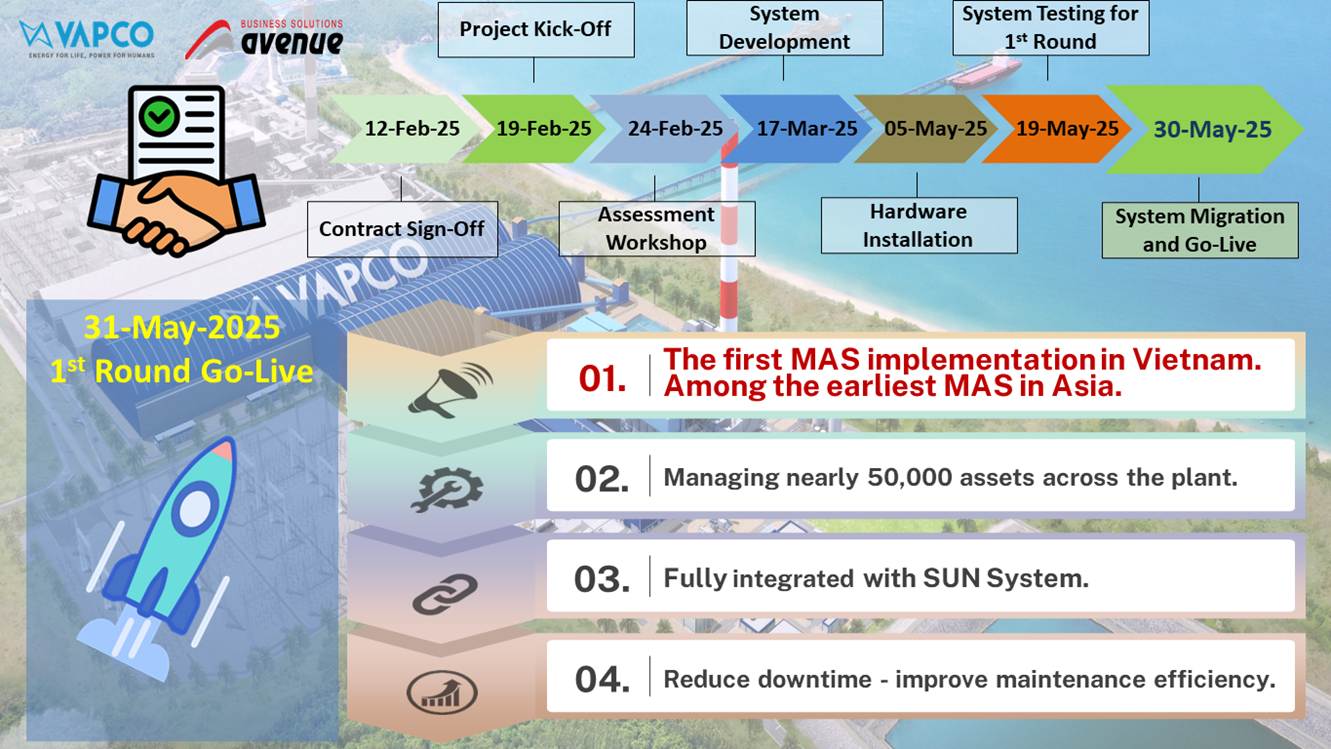
💡 Key Highlights of MAS system at VAPCO:
- Data digitalization: 50,000 plant assets are structured in a hierarchical format
- End-to-end maintenance workflow digitization: from work request → PTW/LOTO → post-maintenance reporting
- Integration with SunSystems for real-time tracking of operational costs, energy sales, and asset depreciation
- Inventory & procurement management: full lifecycle control over materials, stock, and purchasing activities
💬 Mr. Nguyen Thanh Quang – Technical and Business Development Director at Avenue JSC – shared:
“The successful implementation of MAS 9 at VAPCO within a short time and under the complex technical requirements is a proven demonstration of Avenue’s delivery capabilities and VAPCO’s strategic digital transformation vision.”
The successful Phase 1 go-live lays a solid groundwork for both teams to move forward with Phase 2 completion, and expand the advanced functions in the next phases. Keep following us for more updates as the full system goes live and completes the digital transformation journey.
AVENUE JSC

Áp dụng Maximo EAM trong ngành năng lượng và dịch vụ tiện ích
BM Maximo Application Suite: ENERGY & UTILITIES giúp cải thiện chiến lược quản lý tài sản và tối ưu hóa hiệu suất quản lý doanh nghiệp và hoàn thiện cho ngành Năng lượng và Tiện ích.
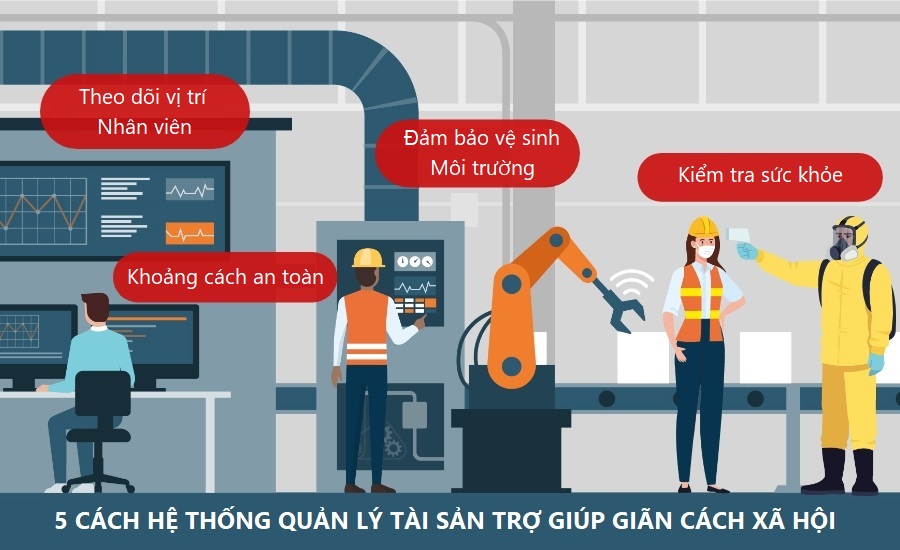
5 cách hệ thống Quản lý Tài sản (EAM) trợ giúp giãn cách xã hội
Đối với các ngành công nghiệp trên thế giới, hệ thống quản lý tài sản EAM là công cụ được sử dụng để trợ giúp nhà máy đáp ứng quy định giãn cách xã hội trong các sự kiện toàn cầu như COVID-19.

Trao quyền Quản lý đáng tin cậy với IBM Maximo’s Predictive Analytics
Phân tích dự đoán (Predictive Analytics ) là một lĩnh vực khai thác dữ liệu (trong EAM / CMMS, SCADA,… và các ứng dụng liên quan đến tài sản, thiết bị), sử dụng và trích xuất thông tin từ dữ liệu để cung cấp thông tin…

The benefits of visibility, control and automation using AI tools
There are petabytes of data generated by intelligent, interconnected and autonomous systems. When combined with AI tools that provide actionable insight, you have the potential…

DBIV-3: Solar Energy in Vietnam: Challenge and opportunities
The 3rd episode on 25 August will focus on the field of Solar energy in Vietnam: Challenges and Opportunities
DATE: 25 August 2021
TIME: 15:30 PM – 17:00 PM
LOCATION: Zoom
Thấu hiểu toàn diện sức khỏe của tài sản cùng với Maximo
Thấu hiểu toàn diện sức khỏe của tài sản để có kế hoạch bảo trì hiệu quả. Tối ưu hóa công tác quản lý vận hành nhà máy. Maximo giải quyết 8 thách thức thường gặp trong hoạt động sản xuất kinh doanh.

Empowering Reliability Leaders with IBM Maximo’s Predictive Analytics
Enterprise asset management (EAM) systems now have predictive analytic capabilities for anticipating potential failures, supporting continual improvement of the business.
Post webinar: Optimise your operation management with Maximo EAM
Our webinar was highly recommended among manufacturing community and had more than 50 attendees to join with us. For who missed the chance to join the webinar, you can access…

The four keys to trustworthy AI
Artificial intelligence is a major factor in people’s lives. It influences who gets a loan, how companies hire and compensate employees, how customers are treated, even where infrastructure and aid are allocated.
Top global asset-intensive industry leaders leverage Maximo
Did you know Maximo is used by 9 out of 10 of the largest utilities companies? Read more fun facts. Enterprise asset management (EAM) addresses the entire lifecycle management.